Air Cooled Chiller Design
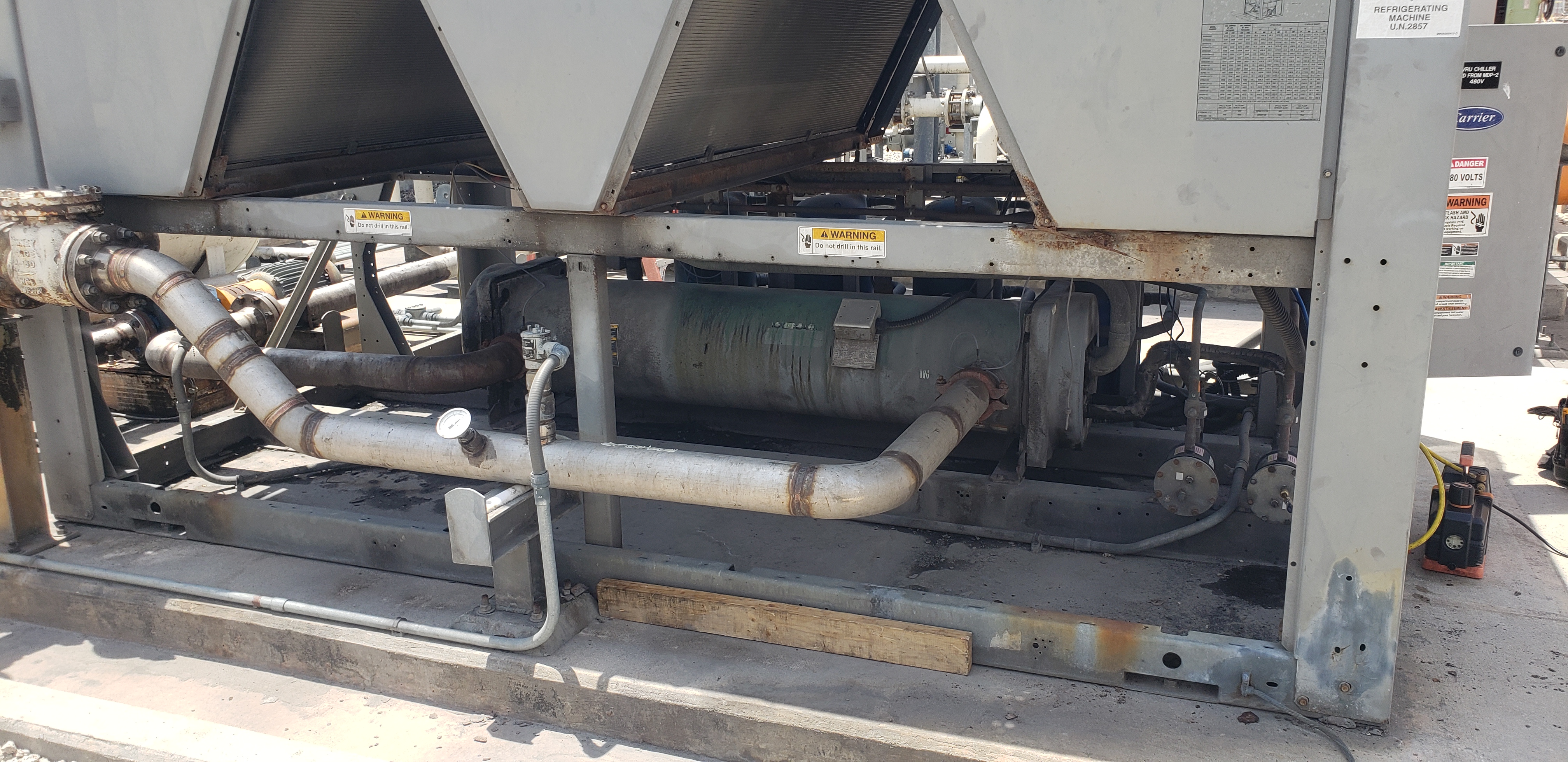
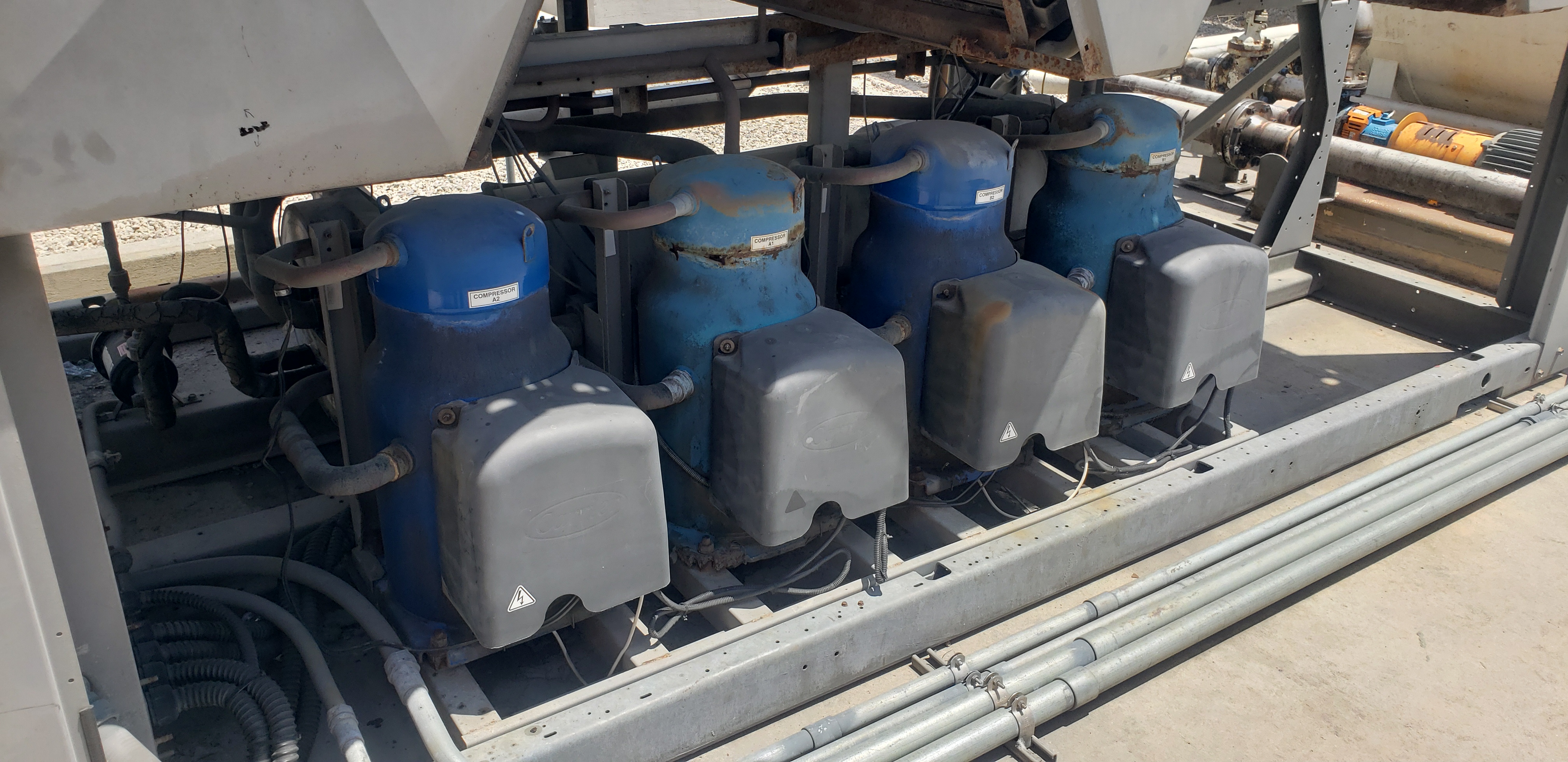
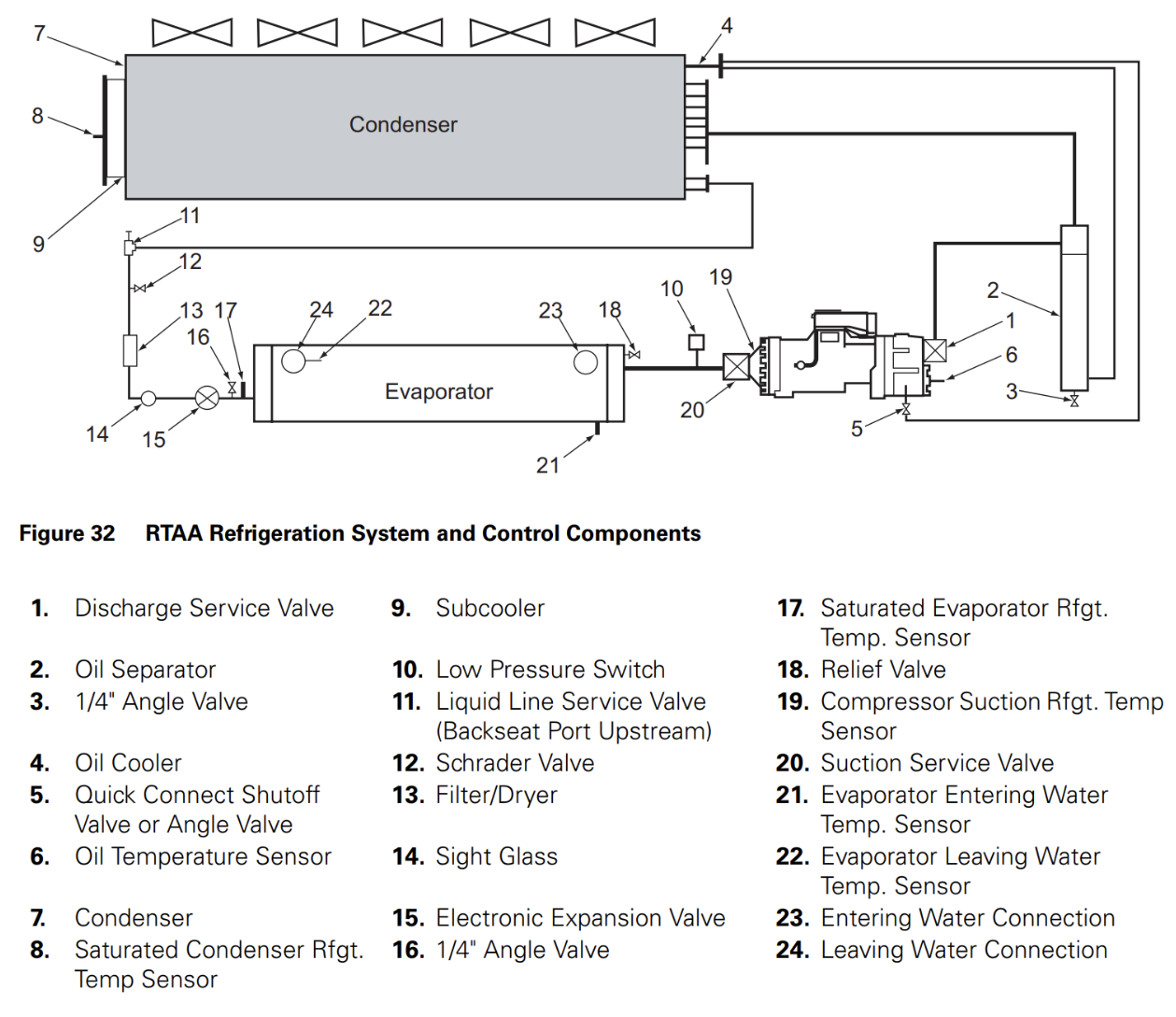
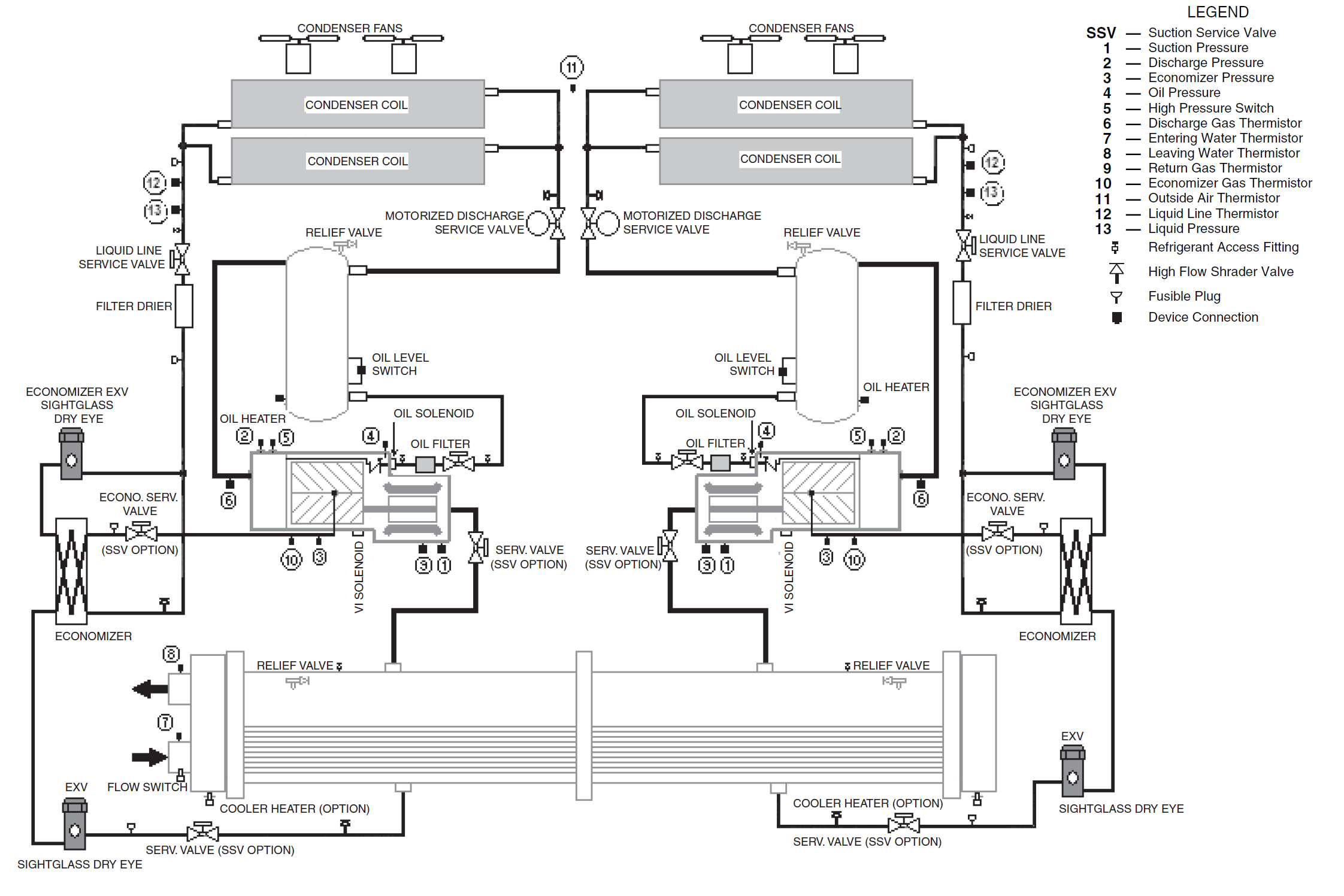
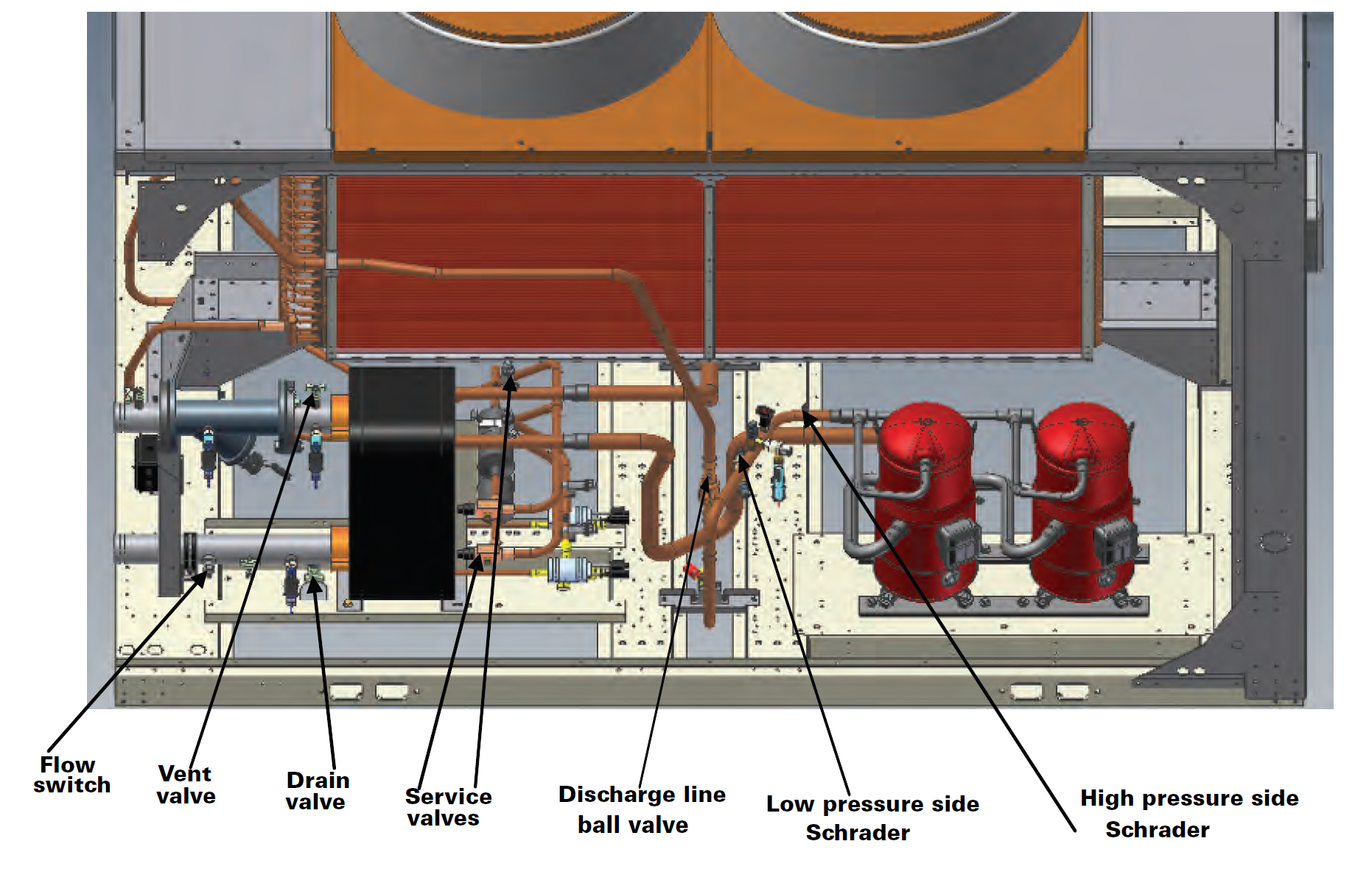
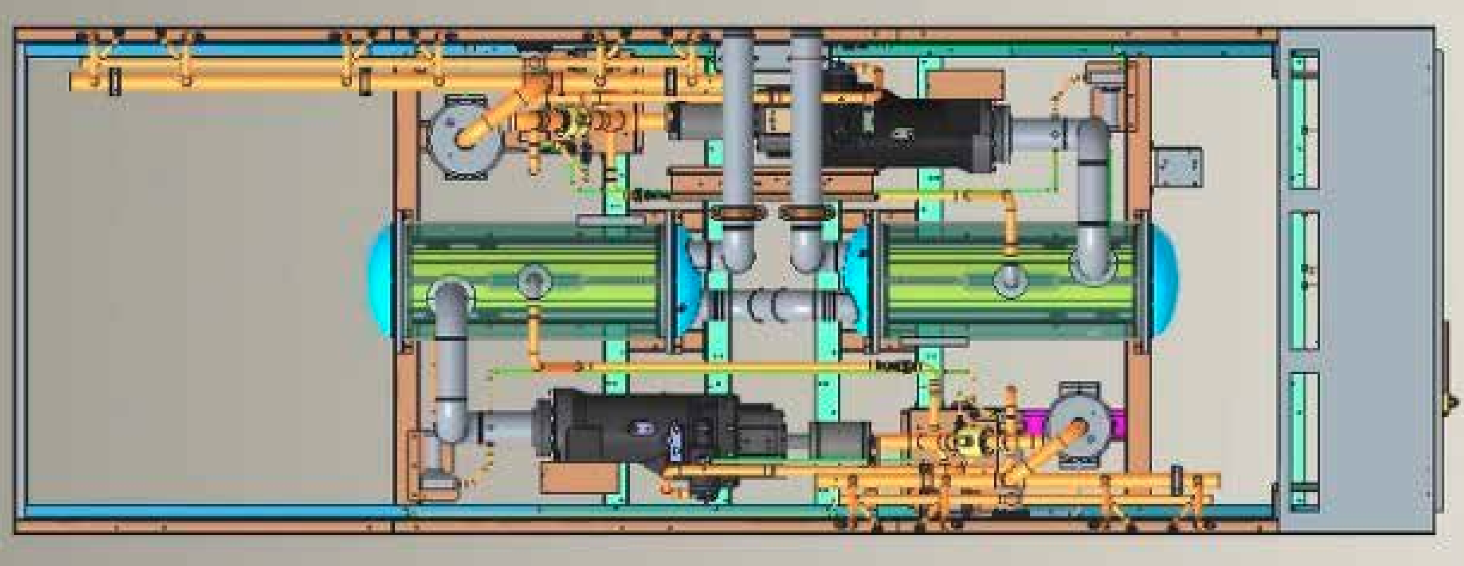
- Air-cooled chillers typically feature a rectangular shape with electrical control panels located either at one end or in the middle of the unit, often with separate high-voltage and low-voltage compartments.
- Condenser coils are positioned in the upper section of the chiller with fans mounted above them, drawing air through the coils and rejecting heat upward into the atmosphere.
- Condenser coil configurations vary widely across manufacturers arranged across the chiller's length.
- Compressors may be mounted directly to the frame (most common), positioned on top of the evaporator, or installed on elevated platforms depending on the manufacturer and specific model design.
- The evaporator is almost always mounted at the frame level in the bottom section of the unit, providing the foundation for the refrigerant circuit design.
- Many air-cooled chillers incorporate economizer circuits to enhance efficiency, with components typically mounted at the frame level alongside oil separators and other auxiliary equipment.
- Some air-cooled chillers include integrated pump packages (single or dual configuration) within the frame, serving as dedicated primary pumps that interface with secondary building loops.
- Remote condenser configurations allow the main chiller components to be installed indoors while the condensers are mounted externally, similar to supermarket refrigeration systems.
- Remote evaporator designs position the heat exchanger closer to the load source while maintaining the condensing section in its original location, though with some efficiency losses.
- Process chillers represent a specialized subset of air-cooled chillers, typically smaller in capacity (5-20 tons) and designed for specific industrial applications like CNC machines, CT scanners, or manufacturing equipment.
- Process chillers often incorporate insulated fluid tanks with immersed evaporator tube bundles and integrated circulation pumps.
- Microchannels have increasingly replaced traditional tube-and-fin condenser coils in modern designs, but not completely, though early implementations with R-134a refrigerant experienced significant leak issues with certain manufacturers.
9 comments